

Civil Rights & Police Misconduct
Wisconsin Police Dog Bite Lawyers
Police K-9 Injuries Can Be Excessive Force Under the Constitution
Police K-9 Injuries Can Be Excessive Force Under the Constitution
Police dogs are capable of inflicting serious, disfiguring injuries — deep puncture wounds, torn muscle and nerve damage, and lasting trauma. When a K-9 is deployed against someone who is not a threat, has surrendered, or is given no chance to comply, the bite can violate the Fourth Amendment’s protection against excessive force. The same is true when an officer allows a dog to continue biting long after any justification has ended.
Strang Bradley represents people across Wisconsin seriously injured by police dogs and holds officers and their departments accountable when K-9 force crosses the constitutional line.
When Is a Police Dog Bite Unlawful?
- Deploying a dog against a person who is unarmed and not actively resisting
- Releasing a K-9 on someone who has already surrendered or is restrained
- Failing to give a clear warning and an opportunity to comply before deployment
- Allowing the dog to continue biting after the person is subdued
- Using a dog for a minor offense where the level of force was grossly disproportionate
The Constitutional Standard
Like other excessive force claims, police dog cases are judged under the ‘objective reasonableness’ standard of Graham v. Connor, weighing the severity of the offense, the immediate threat the person posed, and whether they were actively resisting or fleeing. Courts also scrutinize whether officers warned the person and gave them a chance to surrender before releasing the dog, and how long the bite was allowed to continue. A bite that may be reasonable against a fleeing violent suspect can be plainly excessive against a compliant or non-threatening person.
What to Do If You Were Injured by a Police Dog
- Get immediate medical care — K-9 bites carry a high risk of serious infection and nerve damage. And medical records are critical evidence.
- Photograph every wound as it heals, and keep all medical documentation.
- Identify witnesses and preserve any video.
- Contact a civil rights attorney promptly to preserve evidence and notice deadlines.
Constitutional and Wisconsin Law
Police dog bite claims are brought under the Fourth Amendment (excessive force) through 42 U.S.C. § 1983; where the person was already in custody, the Eighth or Fourteenth Amendment may apply. Liability can extend beyond the handler to supervisors and to the municipality under Monell — for example, where a department’s K-9 training, warning policies, or ‘bite-and-hold’ practices reflect deliberate indifference to constitutional rights.
Compensation You May Be Entitled To From A Police Dog Bite
- Medical expenses including surgery and reconstruction
- Future care for scarring and nerve damage
- Lost wages and earning capacity
- Pain, suffering, and psychological trauma
- Compensation for the constitutional violation itself
- Punitive damages against the handler in egregious cases
- Attorney’s fees under 42 U.S.C. § 1988
Why Choose Strang Bradley for a Police Dog Bite Case
These cases turn on the details — the warnings given, the timing of the release, the duration of the bite, and the department’s K-9 policies. Our attorneys know how to obtain training records and use-of-force logs, secure bodycam and dashcam footage before it disappears, and present the constitutional violation clearly to a jury.
In the news
-
 55 Swatting Calls: A Couple’s Fight Against Online Stalkers and the Police
The city of Milwaukee agreed to a $575,000 settlement after months of heavily armed police responses to 911 calls to the couple’s home that officials knew were hoaxes.
John Bradley, a lawyer for the couple, acknowledged that the Milwaukee police “did their job on the first few swatting calls.”
“The problem,” he added, “came after it had happened dozens of times.”
55 Swatting Calls: A Couple’s Fight Against Online Stalkers and the Police
The city of Milwaukee agreed to a $575,000 settlement after months of heavily armed police responses to 911 calls to the couple’s home that officials knew were hoaxes.
John Bradley, a lawyer for the couple, acknowledged that the Milwaukee police “did their job on the first few swatting calls.”
“The problem,” he added, “came after it had happened dozens of times.”
-
 Wisconsin police chief sued 3x, accused of unconstitutional stops
A sheriff’s deputy and small-town police chief, Brendan Cutrell, is the subject of three federal lawsuits alleging he violated the Fourth Amendment rights of individuals he pulled over.
Wisconsin police chief sued 3x, accused of unconstitutional stops
A sheriff’s deputy and small-town police chief, Brendan Cutrell, is the subject of three federal lawsuits alleging he violated the Fourth Amendment rights of individuals he pulled over.
-
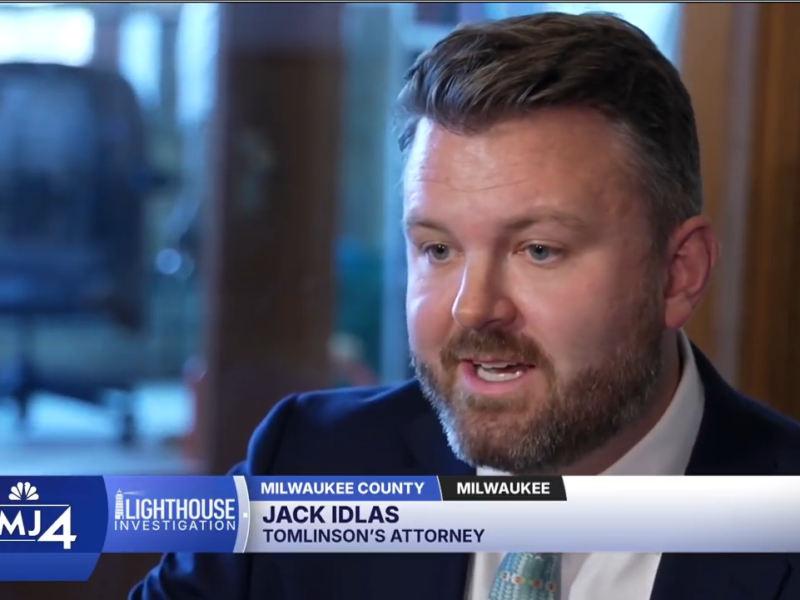 TMJ4 Lighthouse Investigation – City of Milwaukee Settles $575,000 Swatting Lawsuit
TMJ4's Investigative Report about the City of Milwaukee Settling a Civil Rights Lawsuit by Niki Robinson and Patrick Tomlinson for $575,000 For MPD's Relentless Swatting of Their Home.
TMJ4 Lighthouse Investigation – City of Milwaukee Settles $575,000 Swatting Lawsuit
TMJ4's Investigative Report about the City of Milwaukee Settling a Civil Rights Lawsuit by Niki Robinson and Patrick Tomlinson for $575,000 For MPD's Relentless Swatting of Their Home.
-
 Milwaukee couple reaches $575,000 settlement with city after repeated swatting responses
After years of harassment, frustration, and danger, a Milwaukee couple is poised to receive a settlement payment from the City of Milwaukee. The city has agreed to pay the $575,000 settlement for not properly training 20 officers involved.
Milwaukee couple reaches $575,000 settlement with city after repeated swatting responses
After years of harassment, frustration, and danger, a Milwaukee couple is poised to receive a settlement payment from the City of Milwaukee. The city has agreed to pay the $575,000 settlement for not properly training 20 officers involved.
-
 City may pay $575,000 to settle MPD ‘swatting’ lawsuit involving local author
Milwaukee City Attorney Evan Goyke is recommending that the city pay more than half a million dollars to settle a federal lawsuit over the Milwaukee Police Department repeatedly entering and searching a local author’s home in response to false 911 calls.
City may pay $575,000 to settle MPD ‘swatting’ lawsuit involving local author
Milwaukee City Attorney Evan Goyke is recommending that the city pay more than half a million dollars to settle a federal lawsuit over the Milwaukee Police Department repeatedly entering and searching a local author’s home in response to false 911 calls.
-
 Strang Bradley defends Wisconsin man on federal charges after posting TikTok videos
CNN has reached out to Stanton’s attorney for comment.
In a statement to the New York Times, John Bradley, a lawyer for Stanton, said: “It is important to remember that the contents of a criminal complaint represent one side of the story and are just allegations. Mr. Stanton pled not guilty. He is presumed innocent, and we will vigorously defend against these charges in court.”
Strang Bradley defends Wisconsin man on federal charges after posting TikTok videos
CNN has reached out to Stanton’s attorney for comment.
In a statement to the New York Times, John Bradley, a lawyer for Stanton, said: “It is important to remember that the contents of a criminal complaint represent one side of the story and are just allegations. Mr. Stanton pled not guilty. He is presumed innocent, and we will vigorously defend against these charges in court.”
-
Strang Bradley defends Wisconsin man facing federal charges related to ICE agents
In a statement, John Bradley, a lawyer for Mr. Stanton, a Marine Corps veteran who served in the Iraq War, said: “It is important to remember that the contents of a criminal complaint represent one side of the story and are just allegations. Mr. Stanton pled not guilty. He is presumed innocent, and we will vigorously defend against these charges in court.”
-
 County, city, several officers named in civil rights lawsuit
A Rhinelander man has filed a federal lawsuit in the United States District Court for the Western District of Wisconsin, alleging seven Oneida County sheriff’s deputies and two city police officers violated his civil rights by engaging in an illegal search and seizure, unreasonable extension of seizure, unlawful arrest and failure to intervene.
County, city, several officers named in civil rights lawsuit
A Rhinelander man has filed a federal lawsuit in the United States District Court for the Western District of Wisconsin, alleging seven Oneida County sheriff’s deputies and two city police officers violated his civil rights by engaging in an illegal search and seizure, unreasonable extension of seizure, unlawful arrest and failure to intervene.
-
Shorewood woman receives $760K civil rights settlement from City of Milwaukee
Stephanie Rapkin has been awarded a $760,000 settlement after suing Shorewood and Whitefish Bay over her arrest in 2020 where police conducted a search of her home without a warrant. “To our knowledge, this is the largest police misconduct civil rights settlement in Wisconsin that doesn’t involve a death or serious injury,” John Bradley, one of Rapkin’s attorneys, told the Journal Sentinel.
Our Team
Strang Bradley’s Civil Rights Lawyers


Answers
Illegal Blood Draw FAQs
-
Is a police dog bite automatically excessive force?
No. It depends on the circumstances — the severity of the offense, the threat posed, whether you were resisting, and whether you were warned and given a chance to comply. A bite on a compliant or non-threatening person is far more likely to be unconstitutional.
-
What if I was suspected of a crime?
Being a suspect does not authorize unlimited force. The analysis still depends on whether the K-9 deployment was reasonable, and allowing a dog to keep biting after you surrendered can be a violation regardless of the underlying suspicion.
-
Who can be held responsible?
The handler, supervisors who approved the practice, and the municipality itself if its K-9 training or policies caused the violation.
Were you hurt by the police? Let’s talk.
Consultations are free and confidential. Tell us what happened and we will tell you how we can help.