

Civil Rights & Police Misconduct
Wisconsin First Amendment Retaliation Lawyers
The Government Cannot Punish You for Exercising Your First Amendment Rights
The Government Cannot Punish You for Exercising Your First Amendment Rights
The First Amendment protects far more than speech — it protects expressive conduct, peaceful protest, the right to record police in public, the right to criticize the government, the practice of religion, and the right to petition for redress of grievances. When police or other government officials punish you for exercising those rights — through a retaliatory arrest, citation, use of force, or other adverse action — they commit a clear constitutional violation.
Strang Bradley represents people across Wisconsin who have been targeted, arrested, or otherwise punished for protected speech and expression, and we hold the responsible officials accountable under 42 U.S.C. § 1983.
What Is First Amendment Retaliation?
A First Amendment retaliation claim generally requires showing that you engaged in protected activity, that the official took an adverse action against you that would deter a person of ordinary firmness from continuing, and that your protected activity was a substantial motivating factor for that action. Common examples include:
- Arresting or citing someone for recording or criticizing police
- Using force or arrest to break up a peaceful, lawful protest
- Retaliating against a whistleblower or someone who filed a complaint against an officer
- Selectively enforcing laws against government critics
- Ejecting or punishing people for speech at public meetings
- Retaliatory traffic stops or harassment following protected expression
Retaliatory Arrests and the Probable Cause Question
For years, the existence of probable cause defeated most retaliatory arrest claims. But in Nieves v. Bartlett (2019), the Supreme Court recognized an important exception: when officers typically do not arrest people for the conduct at issue — for example, jaywalking — evidence that you were singled out for your speech can keep a retaliatory arrest claim alive even if technical probable cause existed. These cases are nuanced, and skilled counsel matters.
What to Do If You Were Retaliated Against
- Preserve all evidence of your protected activity — videos, photos, social media posts, complaint filings, or protest documentation.
- Write down the sequence of events: what you said or did, how officials responded, and any statements showing their motive.
- Contact a civil rights attorney promptly — preservation of evidence can be time-sensitive and notice deadlines for claims against government entities are short.
Constitutional and Wisconsin Law
First Amendment retaliation claims are brought directly under the First Amendment through 42 U.S.C. § 1983. Where retaliation took the form of a wrongful arrest or excessive force, Fourth Amendment claims may also apply. A municipality may face Monell liability where retaliatory practices reflect a policy, custom, or failure to train.
Compensation You May Be Entitled To From First Amendment Retaliation
- Emotional distress and harm to reputation
- Lost wages from any resulting detention
- Physical injuries from any force used
- Compensation for the constitutional violation itself
- Punitive damages against individual officials in egregious cases
- Injunctive relief
- Attorney’s fees under 42 U.S.C. § 1988
Why Choose Strang Bradley for a First Amendment Retaliation Case
These claims require proving motive — what officials were really thinking when they acted. Our attorneys know how to develop that evidence through discovery, navigate the demanding standards of Nieves and its progeny, and present the case for free expression compellingly to a jury. We are strong believers in the rights the First Amendment protects.
Strang Bradley’s History of Winning First Amendment Cases
A selection of the First Amendment cases the firm has recently filed, won on summary judgment, and obtained judgments in.
Judgments Obtained
-
Carter v. City of New Berlin et al
No. 2:25-CV-01719 (E.D. Wis.)
Date Case Filed: 11/4/25
Defendants: City of New Berlin, Lisette Ceballos, Melissa Romenesko, and Stacey Howard
Claims:- Count 1: Prolonged Seizure
- Count 2: False Arrest
- Count 3: Retaliation
- Count 4: Monell Claim Against City of New Berlin
- Count 5: Indemnification Claim Against City of New Berlin
Date of Judgment: April 17, 2026
Judgment entered for plaintiff Richard Carter against the City of New Berlin, Lisette Ceballos, Melissa Romenesko, and Stacey Howard.
In the news
-
 55 Swatting Calls: A Couple’s Fight Against Online Stalkers and the Police
The city of Milwaukee agreed to a $575,000 settlement after months of heavily armed police responses to 911 calls to the couple’s home that officials knew were hoaxes.
John Bradley, a lawyer for the couple, acknowledged that the Milwaukee police “did their job on the first few swatting calls.”
“The problem,” he added, “came after it had happened dozens of times.”
55 Swatting Calls: A Couple’s Fight Against Online Stalkers and the Police
The city of Milwaukee agreed to a $575,000 settlement after months of heavily armed police responses to 911 calls to the couple’s home that officials knew were hoaxes.
John Bradley, a lawyer for the couple, acknowledged that the Milwaukee police “did their job on the first few swatting calls.”
“The problem,” he added, “came after it had happened dozens of times.”
-
 Wisconsin police chief sued 3x, accused of unconstitutional stops
A sheriff’s deputy and small-town police chief, Brendan Cutrell, is the subject of three federal lawsuits alleging he violated the Fourth Amendment rights of individuals he pulled over.
Wisconsin police chief sued 3x, accused of unconstitutional stops
A sheriff’s deputy and small-town police chief, Brendan Cutrell, is the subject of three federal lawsuits alleging he violated the Fourth Amendment rights of individuals he pulled over.
-
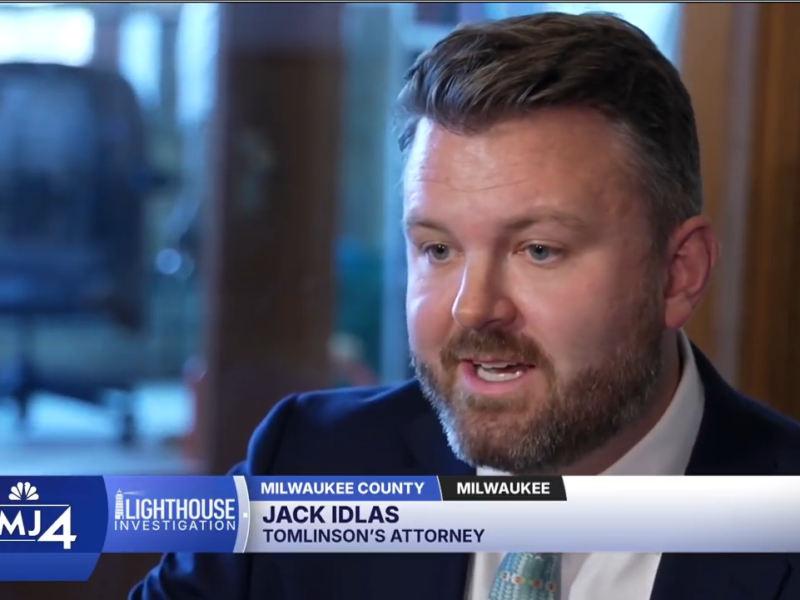 TMJ4 Lighthouse Investigation – City of Milwaukee Settles $575,000 Swatting Lawsuit
TMJ4's Investigative Report about the City of Milwaukee Settling a Civil Rights Lawsuit by Niki Robinson and Patrick Tomlinson for $575,000 For MPD's Relentless Swatting of Their Home.
TMJ4 Lighthouse Investigation – City of Milwaukee Settles $575,000 Swatting Lawsuit
TMJ4's Investigative Report about the City of Milwaukee Settling a Civil Rights Lawsuit by Niki Robinson and Patrick Tomlinson for $575,000 For MPD's Relentless Swatting of Their Home.
-
 Milwaukee couple reaches $575,000 settlement with city after repeated swatting responses
After years of harassment, frustration, and danger, a Milwaukee couple is poised to receive a settlement payment from the City of Milwaukee. The city has agreed to pay the $575,000 settlement for not properly training 20 officers involved.
Milwaukee couple reaches $575,000 settlement with city after repeated swatting responses
After years of harassment, frustration, and danger, a Milwaukee couple is poised to receive a settlement payment from the City of Milwaukee. The city has agreed to pay the $575,000 settlement for not properly training 20 officers involved.
-
 City may pay $575,000 to settle MPD ‘swatting’ lawsuit involving local author
Milwaukee City Attorney Evan Goyke is recommending that the city pay more than half a million dollars to settle a federal lawsuit over the Milwaukee Police Department repeatedly entering and searching a local author’s home in response to false 911 calls.
City may pay $575,000 to settle MPD ‘swatting’ lawsuit involving local author
Milwaukee City Attorney Evan Goyke is recommending that the city pay more than half a million dollars to settle a federal lawsuit over the Milwaukee Police Department repeatedly entering and searching a local author’s home in response to false 911 calls.
-
 Strang Bradley defends Wisconsin man on federal charges after posting TikTok videos
CNN has reached out to Stanton’s attorney for comment.
In a statement to the New York Times, John Bradley, a lawyer for Stanton, said: “It is important to remember that the contents of a criminal complaint represent one side of the story and are just allegations. Mr. Stanton pled not guilty. He is presumed innocent, and we will vigorously defend against these charges in court.”
Strang Bradley defends Wisconsin man on federal charges after posting TikTok videos
CNN has reached out to Stanton’s attorney for comment.
In a statement to the New York Times, John Bradley, a lawyer for Stanton, said: “It is important to remember that the contents of a criminal complaint represent one side of the story and are just allegations. Mr. Stanton pled not guilty. He is presumed innocent, and we will vigorously defend against these charges in court.”
-
Strang Bradley defends Wisconsin man facing federal charges related to ICE agents
In a statement, John Bradley, a lawyer for Mr. Stanton, a Marine Corps veteran who served in the Iraq War, said: “It is important to remember that the contents of a criminal complaint represent one side of the story and are just allegations. Mr. Stanton pled not guilty. He is presumed innocent, and we will vigorously defend against these charges in court.”
-
 County, city, several officers named in civil rights lawsuit
A Rhinelander man has filed a federal lawsuit in the United States District Court for the Western District of Wisconsin, alleging seven Oneida County sheriff’s deputies and two city police officers violated his civil rights by engaging in an illegal search and seizure, unreasonable extension of seizure, unlawful arrest and failure to intervene.
County, city, several officers named in civil rights lawsuit
A Rhinelander man has filed a federal lawsuit in the United States District Court for the Western District of Wisconsin, alleging seven Oneida County sheriff’s deputies and two city police officers violated his civil rights by engaging in an illegal search and seizure, unreasonable extension of seizure, unlawful arrest and failure to intervene.
-
Shorewood woman receives $760K civil rights settlement from City of Milwaukee
Stephanie Rapkin has been awarded a $760,000 settlement after suing Shorewood and Whitefish Bay over her arrest in 2020 where police conducted a search of her home without a warrant. “To our knowledge, this is the largest police misconduct civil rights settlement in Wisconsin that doesn’t involve a death or serious injury,” John Bradley, one of Rapkin’s attorneys, told the Journal Sentinel.
Our Team
Strang Bradley’s Civil Rights Lawyers


Answers
First Amendment Retaliation FAQs
-
Do I have the right to record police?
Yes. Courts widely recognize a First Amendment right to record police performing their duties in public. Arresting or punishing you for doing so can be unlawful retaliation.
-
Can I have a claim even if there was probable cause for my arrest?
Sometimes. Under Nieves v. Bartlett, if police do not normally arrest people for the conduct you were doing, evidence that you were singled out for your speech can keep your claim alive despite probable cause
-
What counts as 'protected activity'?
Speech, peaceful protest, recording or criticizing officials, filing complaints, religious practice, and petitioning the government are all protected. Retaliation for any of them can support a claim.
Were your First Amendment rights violated? Let’s talk.
Consultations are free and confidential. Tell us what happened and we will tell you how we can help.