

Civil Rights & Police Misconduct
Wisconsin Civil Rights Appeal Lawyers
Important Civil Rights Cases Are Often Won or Lost on Appeal
Important Civil Rights Cases Are Often Won or Lost on Appeal
Civil rights litigation turns on difficult, constantly evolving constitutional questions—qualified immunity, the contours of the Fourth Amendment, municipal (Monell) liability, and unsettled corners of 42 U.S.C. § 1983 law. These issues are frequently decided not by a jury but by appellate judges, and a single ruling can make or break a case. Whether you received an adverse decision or must defend a hard-won verdict on appeal, appellate advocacy is a distinct discipline with its own demanding rules and short deadlines.
Strang Bradley handles civil rights appeals in the Wisconsin appellate courts and in federal court, including before the United States Court of Appeals for the Seventh Circuit.
When an Appeal May Be Necessary
- A case dismissed on qualified immunity before reaching a jury
- Summary judgment granted against a civil rights plaintiff
- An adverse jury verdict tainted by legal error
- Evidentiary or jury-instruction errors that affected the outcome
- A defendant’s appeal of a verdict or ruling in your favor
- Interlocutory appeals, which are common in qualified-immunity disputes
Why Civil Rights Appeals Demand Specialized Skill
An appeal is not a second trial. It is a focused argument about legal error in the existing record, governed by strict standards of review and unforgiving deadlines and formatting rules. Success depends on identifying the strongest preserved issues, mastering a dense and shifting body of constitutional precedent, and presenting a clear, persuasive written brief — followed, when granted, by oral argument. Qualified immunity in particular requires showing whether the right at issue was ‘clearly established,’ a demanding and frequently outcome-determinative inquiry.
What to Do If You Are Considering an Appeal
- Act immediately — deadlines to file a notice of appeal are short and generally cannot be extended.
- Have the issues evaluated by counsel experienced in appellate and civil rights law as early as possible.
- If you are responding to the other side’s appeal, do not wait — response deadlines move quickly once an appeal is filed.
Constitutional and Procedural Framework
Federal civil rights appeals proceed under the rules of the Seventh Circuit and the Federal Rules of Appellate Procedure. Many civil rights appeals involve qualified immunity, which can be appealed even before final judgment, making early and skilled appellate involvement especially important
How Strang Bradley Can Help
Our attorneys handle appeals both for clients who lost at the trial level and for those defending favorable outcomes. We assess the realistic prospects honestly, identify the issues most likely to succeed, and craft the rigorous briefing these courts expect. Civil rights appellate work rewards deep doctrinal knowledge and clear writing — exactly the strengths our firm brings.
In the news
-
 55 Swatting Calls: A Couple’s Fight Against Online Stalkers and the Police
The city of Milwaukee agreed to a $575,000 settlement after months of heavily armed police responses to 911 calls to the couple’s home that officials knew were hoaxes.
John Bradley, a lawyer for the couple, acknowledged that the Milwaukee police “did their job on the first few swatting calls.”
“The problem,” he added, “came after it had happened dozens of times.”
55 Swatting Calls: A Couple’s Fight Against Online Stalkers and the Police
The city of Milwaukee agreed to a $575,000 settlement after months of heavily armed police responses to 911 calls to the couple’s home that officials knew were hoaxes.
John Bradley, a lawyer for the couple, acknowledged that the Milwaukee police “did their job on the first few swatting calls.”
“The problem,” he added, “came after it had happened dozens of times.”
-
 Wisconsin police chief sued 3x, accused of unconstitutional stops
A sheriff’s deputy and small-town police chief, Brendan Cutrell, is the subject of three federal lawsuits alleging he violated the Fourth Amendment rights of individuals he pulled over.
Wisconsin police chief sued 3x, accused of unconstitutional stops
A sheriff’s deputy and small-town police chief, Brendan Cutrell, is the subject of three federal lawsuits alleging he violated the Fourth Amendment rights of individuals he pulled over.
-
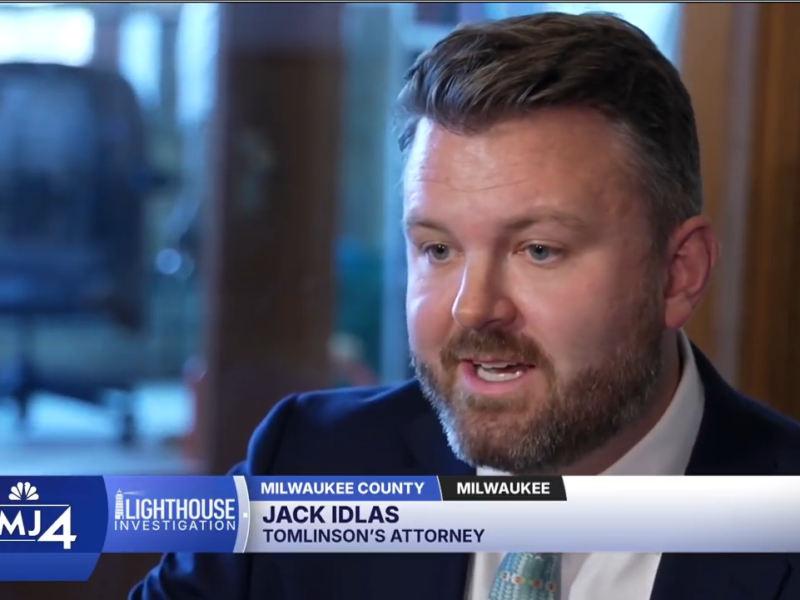 TMJ4 Lighthouse Investigation – City of Milwaukee Settles $575,000 Swatting Lawsuit
TMJ4's Investigative Report about the City of Milwaukee Settling a Civil Rights Lawsuit by Niki Robinson and Patrick Tomlinson for $575,000 For MPD's Relentless Swatting of Their Home.
TMJ4 Lighthouse Investigation – City of Milwaukee Settles $575,000 Swatting Lawsuit
TMJ4's Investigative Report about the City of Milwaukee Settling a Civil Rights Lawsuit by Niki Robinson and Patrick Tomlinson for $575,000 For MPD's Relentless Swatting of Their Home.
-
 Milwaukee couple reaches $575,000 settlement with city after repeated swatting responses
After years of harassment, frustration, and danger, a Milwaukee couple is poised to receive a settlement payment from the City of Milwaukee. The city has agreed to pay the $575,000 settlement for not properly training 20 officers involved.
Milwaukee couple reaches $575,000 settlement with city after repeated swatting responses
After years of harassment, frustration, and danger, a Milwaukee couple is poised to receive a settlement payment from the City of Milwaukee. The city has agreed to pay the $575,000 settlement for not properly training 20 officers involved.
-
 City may pay $575,000 to settle MPD ‘swatting’ lawsuit involving local author
Milwaukee City Attorney Evan Goyke is recommending that the city pay more than half a million dollars to settle a federal lawsuit over the Milwaukee Police Department repeatedly entering and searching a local author’s home in response to false 911 calls.
City may pay $575,000 to settle MPD ‘swatting’ lawsuit involving local author
Milwaukee City Attorney Evan Goyke is recommending that the city pay more than half a million dollars to settle a federal lawsuit over the Milwaukee Police Department repeatedly entering and searching a local author’s home in response to false 911 calls.
-
 Strang Bradley defends Wisconsin man on federal charges after posting TikTok videos
CNN has reached out to Stanton’s attorney for comment.
In a statement to the New York Times, John Bradley, a lawyer for Stanton, said: “It is important to remember that the contents of a criminal complaint represent one side of the story and are just allegations. Mr. Stanton pled not guilty. He is presumed innocent, and we will vigorously defend against these charges in court.”
Strang Bradley defends Wisconsin man on federal charges after posting TikTok videos
CNN has reached out to Stanton’s attorney for comment.
In a statement to the New York Times, John Bradley, a lawyer for Stanton, said: “It is important to remember that the contents of a criminal complaint represent one side of the story and are just allegations. Mr. Stanton pled not guilty. He is presumed innocent, and we will vigorously defend against these charges in court.”
-
Strang Bradley defends Wisconsin man facing federal charges related to ICE agents
In a statement, John Bradley, a lawyer for Mr. Stanton, a Marine Corps veteran who served in the Iraq War, said: “It is important to remember that the contents of a criminal complaint represent one side of the story and are just allegations. Mr. Stanton pled not guilty. He is presumed innocent, and we will vigorously defend against these charges in court.”
-
 County, city, several officers named in civil rights lawsuit
A Rhinelander man has filed a federal lawsuit in the United States District Court for the Western District of Wisconsin, alleging seven Oneida County sheriff’s deputies and two city police officers violated his civil rights by engaging in an illegal search and seizure, unreasonable extension of seizure, unlawful arrest and failure to intervene.
County, city, several officers named in civil rights lawsuit
A Rhinelander man has filed a federal lawsuit in the United States District Court for the Western District of Wisconsin, alleging seven Oneida County sheriff’s deputies and two city police officers violated his civil rights by engaging in an illegal search and seizure, unreasonable extension of seizure, unlawful arrest and failure to intervene.
-
Shorewood woman receives $760K civil rights settlement from City of Milwaukee
Stephanie Rapkin has been awarded a $760,000 settlement after suing Shorewood and Whitefish Bay over her arrest in 2020 where police conducted a search of her home without a warrant. “To our knowledge, this is the largest police misconduct civil rights settlement in Wisconsin that doesn’t involve a death or serious injury,” John Bradley, one of Rapkin’s attorneys, told the Journal Sentinel.
Our Team
Strang Bradley’s Civil Rights Lawyers


Answers
Civil Rights Appeal FAQs
-
How long do I have to file an appeal?
Not long. Deadlines to file a notice of appeal are strict — often a matter of weeks — and are generally not extendable.
-
Can a qualified immunity dismissal be appealed?
Yes, and often right away. Qualified immunity rulings can frequently be appealed before the case is over, which is one reason these appeals require specialized handling.
-
Do you only handle appeals you filed at trial?
No. We take on appeals in cases tried by other lawyers, both to challenge adverse rulings and to defend verdicts on appeal.
Was a loved one shot by police? Let’s talk.
Consultations are free and confidential. Tell us what happened and we will tell you how we can help.