

Civil Rights & Police Misconduct
Wisconsin Excessive Force Lawyers
When police use force beyond what the situation requires, you have the right to hold them accountable.
When police use force beyond what the situation requires, you have the right to hold them accountable.
Law enforcement officers have the authority to use force when it is genuinely necessary — but that authority has limits. When officers go beyond what the situation requires — beating a handcuffed person, using a taser on someone who poses no threat, or using an unreasonable amount of force without justification — that is a civil rights violation. Victims of excessive force can pursue justice through a federal civil rights lawsuit.
At Strang Bradley, we represent individuals and families across Wisconsin who have been harmed by law enforcement misconduct. We understand both the legal framework and the human cost of these cases, and we fight hard for accountability and compensation.
What Counts as Excessive Force?
The constitutional standard comes from the U.S. Supreme Court’s decision in Graham v. Connor, which asks whether the officer’s use of force was “objectively reasonable” under the circumstances — judged from the perspective of a reasonable officer on the scene, not with the benefit of hindsight. Relevant factors include:
- The severity of the crime or infraction at issue
- Whether the individual posed an immediate threat to the safety of officers or others
- Whether the individual was actively resisting arrest or attempting to evade arrest by flight
Examples of excessive force include striking, kicking, or stomping a person who is already restrained or compliant; using a taser, pepper spray, or baton against someone who is not resisting; choking, neck restraints, or positional asphyxiation; deploying a police dog against a non-threatening person; or using force against bystanders and witnesses who are simply present.
What to Do If You Were a Victim of Excessive Force
- Document every injury with photographs, and seek medical attention immediately — even if you believe your injuries are minor. Medical records are critical evidence.
- Write down exactly what happened as soon as possible: what was said, where officers were positioned, and the sequence of events. Memory fades.
- Identify any witnesses — bystanders, neighbors, other officers — and obtain their contact information if you can.
- If you can, speak with any attorney before law enforcement.
- Contact Strang Bradley as soon as possible. Strict deadlines apply to civil rights claims, including a notice requirement for some claims against governmental entities.
Constitutional and Wisconsin Law
Excessive force claims are brought under the Fourth Amendment, which protects against unreasonable seizures, through 42 U.S.C. § 1983 — the primary federal civil rights statute. If the force occurred while a person was in custody (post-arrest), the Eighth Amendment may also apply. In addition to the officer who used force, liability may extend to the municipality or county when the force resulted from a policy, custom, or pattern of misconduct (under Monell v. Department of Social Services); to supervisors who knew of or approved unlawful conduct; and to officers who witnessed the excessive force and failed to intervene.
Compensation You May Be Entitled To
A successful claim can recover medical expenses (including ongoing treatment), lost wages and lost earning capacity, pain and suffering, psychological trauma such as PTSD and anxiety, compensation for the constitutional violation itself, punitive damages against the officer individually, and — under 42 U.S.C. § 1988 — your attorney’s fees and costs.
Why Choose Strang Bradley
Civil rights cases against law enforcement are difficult. Officers are often protected by qualified immunity, municipalities vigorously defend their employees, and evidence can disappear quickly. Our attorneys know how to navigate these obstacles — from filing proper notices and obtaining body-camera footage to deposing officers and presenting these cases to juries. Our civil rights team has spent their careers fighting for people whose rights have been violated by those in power.
Featured Case Victory
Holding the City of Milwaukee Accountable for Failing to Train and Supervise Its Officers

Even when the government insists it did nothing wrong, the Fourth Amendment still draws a firm line at the front door of your home. Strang Bradley secured a series of rulings that the searches and seizures were unconstitutional, and reached a $575,000 settlement with the City of Milwaukee.
What Happened
Beginning in 2018, Niki Robinson and Patrick Tomlinson became repeated victims of “swatting,” the practice of placing hoax emergency calls designed to provoke an armed police response to a victim’s home. Over the following two years, anonymous callers reported murders, hostage situations, mass shootings, and suicides at their home address. In all, Milwaukee police were sent to the home 45 times, and repeatedly:
- Ordered Niki and Patrick out of their own home at gunpoint
- Entered and searched the house without a warrant
- Handcuffed Patrick on his front porch, in a state of undress, at roughly 1:00 a.m.
- Threatened to kick down the door when the couple declined to let officers inside
Internally, the Milwaukee Police Department understood exactly what was happening. When one officer requested that the home be flagged as a “Swatter House” in the dispatch system, a supervisor declined, and their home kept getting raided.
The Lawsuit
Strang Bradley filed a federal civil rights action under 42 U.S.C. § 1983, naming the City of Milwaukee and twenty members of the Milwaukee Police Department, including two sergeants. The complaint alleged that the officers violated the couple’s Fourth Amendment rights through unlawful searches and seizures and through their failure to intervene to stop one another, and that the City itself was liable under Monell v. Department of Social Services for failing to train and supervise its officers and for failing to adopt any policy to protect the couple from a danger it plainly knew about.
The Fourth Amendment treats the home as “first among equals.” Police may walk up, knock, and ask to talk — but the moment they refuse to take no for an answer, force a resident outside, or cross the threshold without a warrant, they need either genuine probable cause or a true emergency. After dozens of demonstrably false calls and a coherent, visibly unharmed resident standing in front of them, the officers had neither.
The Court’s Findings
On March 26, 2026, U.S. District Judge J.P. Stadtmueller issued a 72-page summary judgment order. The court repeatedly agreed with our clients on the core constitutional question, finding that the officers’ conduct repeatedly violated the Fourth Amendment.
The court did dismiss the claims against the individual officers on qualified immunity grounds — not because their actions were lawful, but because, in the court’s view, no prior case had yet “clearly established” how officers must handle repeated swatting at a known address. Significantly, however, the court allowed the municipal liability (Monell) claims against the City of Milwaukee to move forward — because, unlike individual officers, a city does not enjoy qualified immunity.
The Resolution
With the City facing trial on the surviving claims, the Milwaukee City Attorney recommended settlement, writing that resolving the case was “in the City’s best interest.” The parties agreed to a $575,000 settlement to compensate Niki Robinson and Patrick Tomlinson for the years of unlawful searches and seizures they endured.
Why This Case Matters
For anyone whose rights have been violated by police — through an unlawful search, an unlawful arrest, excessive force, or a department’s failure to train and supervise its officers — this result shows what determined civil rights litigation can accomplish, even against the defense of qualified immunity.
Settling this case brings some closure to a long and stressful chapter in Niki and Patrick’s lives. While no settlement can fix the past or fully account for the conduct of City officials involved, this resolution is some acknowledgment of the repeated constitutional violations that Niki and Patrick endured.
Jack Idlas, Strang Bradley
Strang Bradley Civil Rights Lawyers Who Worked On This Case


Strang Bradley’s History of Winning Excessive Force Cases
A selection of the excessive-force cases the firm has recently filed, won on summary judgment, and obtained judgments in.
Recent Cases Filed
-
Lilteich v. State of Wisconsin et al
No. 3:25-CV-00047 (W.D. Wis.)
Date Case Filed: 1/22/25
Defendants: State of Wisconsin, Wisconsin Department of Corrections, Brett Mierzejewski, Candice Andrychowicz, Jennifer Burns, Matthew Conard, Rick Dreikosen, Zachery Ebben, John Halle, Linda Holentunder, Amy Kalmus, Corinna Lefeber, Christopher Rost, Lisa Schneider, Nathan Schroeder, Patrick Vanderwaal, Susan Sickinger, Mark Raeder, Terry Schuett, Harold Beck, Jeremy Wiltzius, Christopher Bruden, Michael Eichstedt, John Gliniecki, Heather Heinen, Amber Moeller, Todd Golembeski, Ryan Wehrmann, and Wayne Olson
Claims:- Count 1: Excessive Force / Failure to Intervene
- Count 2: Failure to Provide Medical Attention
- Count 3: Americans with Disabilities Act and Rehabilitation Act Claims
- Count 4: Excessive Force / Failure to Intervene
- Count 5: Failure to Provide Medical Attention
- Count 6: Americans with Disabilities Act and Rehabilitation Act Claims
- Count 7: Excessive Force / Failure to Intervene
- Count 8: Failure to Provide Medical Attention
- Count 9: Americans with Disabilities Act and Rehabilitation Act Claims
-
Koplien v. Marathon County et al
No. 3:26-CV-00066 (W.D. Wis.)
Date Case Filed: 1/27/26
Defendants: Marathon County, Tristen Wanden, Ronald Kohlmann, and Lor Vang
Claims:- Count 1: Excessive Force (Against Defendant Ronald Kohlmann)
- Count 2: Deliberate Indifference to Serious Medical Needs
- Count 3: Monell Claim Against Marathon County
- Count 4: Indemnification Claim Against Marathon County
-
Vargas v. City of West Allis et al
No. 2:26-CV-00343 (E.D. Wis.)
Date Case Filed: 3/2/26
Defendants: City of West Allis, Morgan Youngquist, Olivia Court, Mark Burckel, Jesse Yiannackopoulos, and Levi Kossow
Claims:- Count 1: Unlawful Seizure and Failure to Intervene
- Count 2: Unlawful Arrest and Failure to Intervene
- Count 3: Excessive Force and Failure to Intervene
- Count 4: Indemnification Claim Against City of West Allis
In the news
-
 55 Swatting Calls: A Couple’s Fight Against Online Stalkers and the Police
The city of Milwaukee agreed to a $575,000 settlement after months of heavily armed police responses to 911 calls to the couple’s home that officials knew were hoaxes.
John Bradley, a lawyer for the couple, acknowledged that the Milwaukee police “did their job on the first few swatting calls.”
“The problem,” he added, “came after it had happened dozens of times.”
55 Swatting Calls: A Couple’s Fight Against Online Stalkers and the Police
The city of Milwaukee agreed to a $575,000 settlement after months of heavily armed police responses to 911 calls to the couple’s home that officials knew were hoaxes.
John Bradley, a lawyer for the couple, acknowledged that the Milwaukee police “did their job on the first few swatting calls.”
“The problem,” he added, “came after it had happened dozens of times.”
-
 Wisconsin police chief sued 3x, accused of unconstitutional stops
A sheriff’s deputy and small-town police chief, Brendan Cutrell, is the subject of three federal lawsuits alleging he violated the Fourth Amendment rights of individuals he pulled over.
Wisconsin police chief sued 3x, accused of unconstitutional stops
A sheriff’s deputy and small-town police chief, Brendan Cutrell, is the subject of three federal lawsuits alleging he violated the Fourth Amendment rights of individuals he pulled over.
-
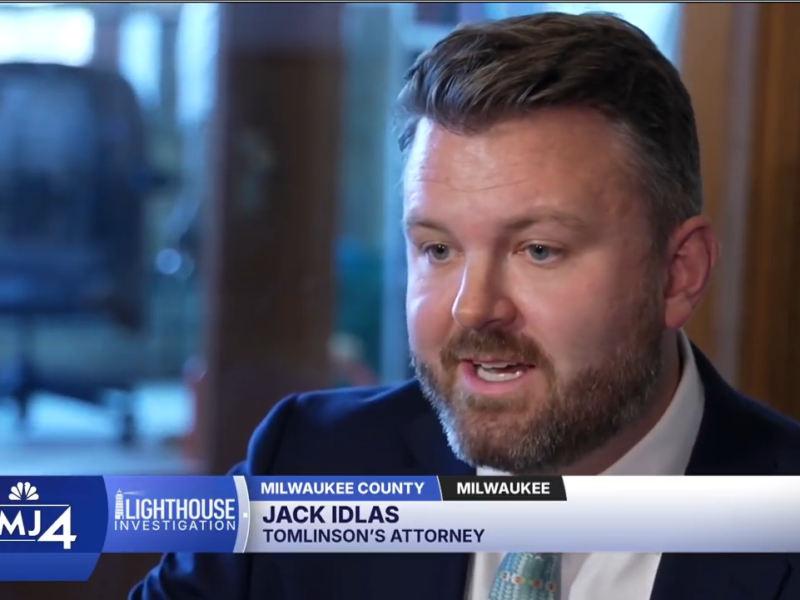 TMJ4 Lighthouse Investigation – City of Milwaukee Settles $575,000 Swatting Lawsuit
TMJ4's Investigative Report about the City of Milwaukee Settling a Civil Rights Lawsuit by Niki Robinson and Patrick Tomlinson for $575,000 For MPD's Relentless Swatting of Their Home.
TMJ4 Lighthouse Investigation – City of Milwaukee Settles $575,000 Swatting Lawsuit
TMJ4's Investigative Report about the City of Milwaukee Settling a Civil Rights Lawsuit by Niki Robinson and Patrick Tomlinson for $575,000 For MPD's Relentless Swatting of Their Home.
-
 Milwaukee couple reaches $575,000 settlement with city after repeated swatting responses
After years of harassment, frustration, and danger, a Milwaukee couple is poised to receive a settlement payment from the City of Milwaukee. The city has agreed to pay the $575,000 settlement for not properly training 20 officers involved.
Milwaukee couple reaches $575,000 settlement with city after repeated swatting responses
After years of harassment, frustration, and danger, a Milwaukee couple is poised to receive a settlement payment from the City of Milwaukee. The city has agreed to pay the $575,000 settlement for not properly training 20 officers involved.
-
 City may pay $575,000 to settle MPD ‘swatting’ lawsuit involving local author
Milwaukee City Attorney Evan Goyke is recommending that the city pay more than half a million dollars to settle a federal lawsuit over the Milwaukee Police Department repeatedly entering and searching a local author’s home in response to false 911 calls.
City may pay $575,000 to settle MPD ‘swatting’ lawsuit involving local author
Milwaukee City Attorney Evan Goyke is recommending that the city pay more than half a million dollars to settle a federal lawsuit over the Milwaukee Police Department repeatedly entering and searching a local author’s home in response to false 911 calls.
-
 Strang Bradley defends Wisconsin man on federal charges after posting TikTok videos
CNN has reached out to Stanton’s attorney for comment.
In a statement to the New York Times, John Bradley, a lawyer for Stanton, said: “It is important to remember that the contents of a criminal complaint represent one side of the story and are just allegations. Mr. Stanton pled not guilty. He is presumed innocent, and we will vigorously defend against these charges in court.”
Strang Bradley defends Wisconsin man on federal charges after posting TikTok videos
CNN has reached out to Stanton’s attorney for comment.
In a statement to the New York Times, John Bradley, a lawyer for Stanton, said: “It is important to remember that the contents of a criminal complaint represent one side of the story and are just allegations. Mr. Stanton pled not guilty. He is presumed innocent, and we will vigorously defend against these charges in court.”
-
Strang Bradley defends Wisconsin man facing federal charges related to ICE agents
In a statement, John Bradley, a lawyer for Mr. Stanton, a Marine Corps veteran who served in the Iraq War, said: “It is important to remember that the contents of a criminal complaint represent one side of the story and are just allegations. Mr. Stanton pled not guilty. He is presumed innocent, and we will vigorously defend against these charges in court.”
-
 County, city, several officers named in civil rights lawsuit
A Rhinelander man has filed a federal lawsuit in the United States District Court for the Western District of Wisconsin, alleging seven Oneida County sheriff’s deputies and two city police officers violated his civil rights by engaging in an illegal search and seizure, unreasonable extension of seizure, unlawful arrest and failure to intervene.
County, city, several officers named in civil rights lawsuit
A Rhinelander man has filed a federal lawsuit in the United States District Court for the Western District of Wisconsin, alleging seven Oneida County sheriff’s deputies and two city police officers violated his civil rights by engaging in an illegal search and seizure, unreasonable extension of seizure, unlawful arrest and failure to intervene.
-
Shorewood woman receives $760K civil rights settlement from City of Milwaukee
Stephanie Rapkin has been awarded a $760,000 settlement after suing Shorewood and Whitefish Bay over her arrest in 2020 where police conducted a search of her home without a warrant. “To our knowledge, this is the largest police misconduct civil rights settlement in Wisconsin that doesn’t involve a death or serious injury,” John Bradley, one of Rapkin’s attorneys, told the Journal Sentinel.
Our Team
Strang Bradley’s Civil Rights Lawyers


Answers
Excessive Force FAQs
-
What is the legal standard for excessive force?
Courts apply the “objective reasonableness” test from Graham v. Connor, weighing the severity of the offense, whether you posed an immediate threat, and whether you were resisting or fleeing — judged from the scene, not in hindsight.
-
Can I sue if I was committing a crime when force was used?
Yes. Even a lawful arrest does not justify excessive force. The question is whether the amount of force was reasonable, not whether you were suspected of an offense.
-
Does qualified immunity automatically bar my case?
No. Qualified immunity can shield officers unless they violated a “clearly established” right. It is a real hurdle, but not an automatic bar — experienced counsel knows how to confront it, including by bringing civil rights claims that are not subject to qualified immunity.
Were you subjected to excessive force? Let’s talk.
Consultations are free and confidential. Tell us what happened and we will tell you how we can help.