

Civil Rights & Police Misconduct
Wisconsin Jail Death Lawyers
When a Person Dies in Custody, Their Family Deserves Answers and Accountability
When a Person Dies in Custody, Their Family Deserves Answers and Accountability
Many in-custody deaths result from preventable failures — untreated medical emergencies, withheld medication, unaddressed withdrawal, ignored suicide risk, or a failure to protect a vulnerable person. Because the government controls every aspect of a detainee’s life, it bears constitutional responsibility for their safety, and the Eighth and Fourteenth Amendments prohibit deliberate indifference to a substantial risk of serious harm.
Strang Bradley represents the families of people who have died in Wisconsin jails and prisons, pursuing both the truth about what happened and accountability for those responsible.
Common Causes of Preventable Jail Deaths
-
- Failure to treat a medical emergency or obvious serious symptoms
- Failure to provide medication for known conditions
- Untreated drug or alcohol withdrawal
- Suicide where the risk was known or obvious and not addressed
- Failure to protect a detainee from violence by others
- Delayed emergency response and inadequate monitoring
- Understaffing and failures in intake screening
Why Independent Investigation Matters
After a death in custody, the facility investigates itself, and the official narrative often takes shape before the family ever speaks to a lawyer. Critical evidence — surveillance video, medical and medication records, cell-check logs, and dispatch recordings — can be lost, overwritten, or withheld. Acting quickly to demand preservation of that evidence and to retain independent experts is often the difference between accountability and a closed file.
What Families Should Do After a Jail Death
-
-
-
- Contact a civil rights attorney immediately — the facility’s investigation is already underway and is protecting the institution.
- Consider an independent autopsy if the cause or circumstances of death are disputed or unclear.
- Gather and preserve all communications you receive from the facility about the death.
- Identify any other detainees or staff who may have witnessed what happened.
- File any necessary notices of claim that might apply.
-
-
Constitutional and Wisconsin Law
Jail death claims are brought under the Eighth and Fourteenth Amendments through 42 U.S.C. § 1983, using the deliberate-indifference standard of Farmer v. Brennan. The county or municipality operating the facility — and any private medical contractor — may be liable under Monell where the death reflects a policy, inadequate training or staffing, or a pattern of ignoring serious risks. Wisconsin’s wrongful death law (Wis. Stat. § 895.03) may provide additional claims for surviving family.
Compensation That May Be Available From A Jail Death
-
-
-
- Medical expenses to treat the worsened condition
- Future care for permanent harm
- Lost wages and earning capacity
- Pain, suffering, and emotional distress
- Compensation for the constitutional violation itself
- Punitive damages against individuals in cases of flagrant indifference
- Attorney’s fees under 42 U.S.C. § 1988
-
-
Why Choose Strang Bradley for a Jail Death Case
These are among the hardest litigated and most important civil rights cases. The government has the evidence, facilities resist transparency, and proving deliberate indifference requires more than showing a mistake was made. Our attorneys know how to move fast to preserve evidence, subpoena and analyze custody records, depose staff, retain medical and corrections experts, and hold institutions accountable for deaths they would rather no one examined.
In the news
-
 55 Swatting Calls: A Couple’s Fight Against Online Stalkers and the Police
The city of Milwaukee agreed to a $575,000 settlement after months of heavily armed police responses to 911 calls to the couple’s home that officials knew were hoaxes.
John Bradley, a lawyer for the couple, acknowledged that the Milwaukee police “did their job on the first few swatting calls.”
“The problem,” he added, “came after it had happened dozens of times.”
55 Swatting Calls: A Couple’s Fight Against Online Stalkers and the Police
The city of Milwaukee agreed to a $575,000 settlement after months of heavily armed police responses to 911 calls to the couple’s home that officials knew were hoaxes.
John Bradley, a lawyer for the couple, acknowledged that the Milwaukee police “did their job on the first few swatting calls.”
“The problem,” he added, “came after it had happened dozens of times.”
-
 Wisconsin police chief sued 3x, accused of unconstitutional stops
A sheriff’s deputy and small-town police chief, Brendan Cutrell, is the subject of three federal lawsuits alleging he violated the Fourth Amendment rights of individuals he pulled over.
Wisconsin police chief sued 3x, accused of unconstitutional stops
A sheriff’s deputy and small-town police chief, Brendan Cutrell, is the subject of three federal lawsuits alleging he violated the Fourth Amendment rights of individuals he pulled over.
-
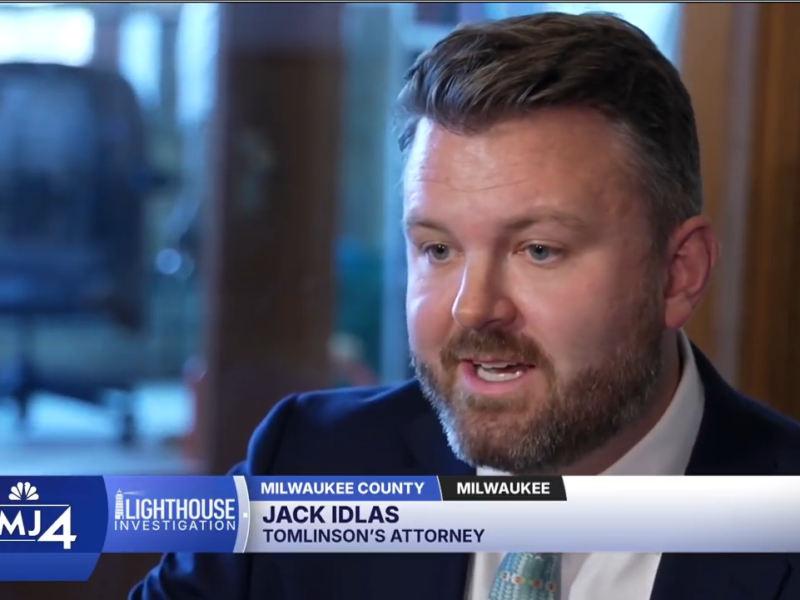 TMJ4 Lighthouse Investigation – City of Milwaukee Settles $575,000 Swatting Lawsuit
TMJ4's Investigative Report about the City of Milwaukee Settling a Civil Rights Lawsuit by Niki Robinson and Patrick Tomlinson for $575,000 For MPD's Relentless Swatting of Their Home.
TMJ4 Lighthouse Investigation – City of Milwaukee Settles $575,000 Swatting Lawsuit
TMJ4's Investigative Report about the City of Milwaukee Settling a Civil Rights Lawsuit by Niki Robinson and Patrick Tomlinson for $575,000 For MPD's Relentless Swatting of Their Home.
-
 Milwaukee couple reaches $575,000 settlement with city after repeated swatting responses
After years of harassment, frustration, and danger, a Milwaukee couple is poised to receive a settlement payment from the City of Milwaukee. The city has agreed to pay the $575,000 settlement for not properly training 20 officers involved.
Milwaukee couple reaches $575,000 settlement with city after repeated swatting responses
After years of harassment, frustration, and danger, a Milwaukee couple is poised to receive a settlement payment from the City of Milwaukee. The city has agreed to pay the $575,000 settlement for not properly training 20 officers involved.
-
 City may pay $575,000 to settle MPD ‘swatting’ lawsuit involving local author
Milwaukee City Attorney Evan Goyke is recommending that the city pay more than half a million dollars to settle a federal lawsuit over the Milwaukee Police Department repeatedly entering and searching a local author’s home in response to false 911 calls.
City may pay $575,000 to settle MPD ‘swatting’ lawsuit involving local author
Milwaukee City Attorney Evan Goyke is recommending that the city pay more than half a million dollars to settle a federal lawsuit over the Milwaukee Police Department repeatedly entering and searching a local author’s home in response to false 911 calls.
-
 Strang Bradley defends Wisconsin man on federal charges after posting TikTok videos
CNN has reached out to Stanton’s attorney for comment.
In a statement to the New York Times, John Bradley, a lawyer for Stanton, said: “It is important to remember that the contents of a criminal complaint represent one side of the story and are just allegations. Mr. Stanton pled not guilty. He is presumed innocent, and we will vigorously defend against these charges in court.”
Strang Bradley defends Wisconsin man on federal charges after posting TikTok videos
CNN has reached out to Stanton’s attorney for comment.
In a statement to the New York Times, John Bradley, a lawyer for Stanton, said: “It is important to remember that the contents of a criminal complaint represent one side of the story and are just allegations. Mr. Stanton pled not guilty. He is presumed innocent, and we will vigorously defend against these charges in court.”
-
Strang Bradley defends Wisconsin man facing federal charges related to ICE agents
In a statement, John Bradley, a lawyer for Mr. Stanton, a Marine Corps veteran who served in the Iraq War, said: “It is important to remember that the contents of a criminal complaint represent one side of the story and are just allegations. Mr. Stanton pled not guilty. He is presumed innocent, and we will vigorously defend against these charges in court.”
-
 County, city, several officers named in civil rights lawsuit
A Rhinelander man has filed a federal lawsuit in the United States District Court for the Western District of Wisconsin, alleging seven Oneida County sheriff’s deputies and two city police officers violated his civil rights by engaging in an illegal search and seizure, unreasonable extension of seizure, unlawful arrest and failure to intervene.
County, city, several officers named in civil rights lawsuit
A Rhinelander man has filed a federal lawsuit in the United States District Court for the Western District of Wisconsin, alleging seven Oneida County sheriff’s deputies and two city police officers violated his civil rights by engaging in an illegal search and seizure, unreasonable extension of seizure, unlawful arrest and failure to intervene.
-
Shorewood woman receives $760K civil rights settlement from City of Milwaukee
Stephanie Rapkin has been awarded a $760,000 settlement after suing Shorewood and Whitefish Bay over her arrest in 2020 where police conducted a search of her home without a warrant. “To our knowledge, this is the largest police misconduct civil rights settlement in Wisconsin that doesn’t involve a death or serious injury,” John Bradley, one of Rapkin’s attorneys, told the Journal Sentinel.
Our Team
Strang Bradley’s Civil Rights Lawyers


Answers
Jail Death FAQs
-
The jail says the death was unavoidable. Should we still talk to a lawyer?
Yes. Facilities investigate themselves and often conclude no one was at fault. An independent investigation frequently uncovers preventable failures the official report omits.
-
How quickly do we need to act?
Immediately. Evidence can be overwritten within days and you may be required to give a government notice of any claims.
-
Who can bring a claim?
Typically the decedent's estate and certain surviving family members, depending on the specific circumstances.
Did a loved one die in prison? Let’s talk.
Consultations are free and confidential. Tell us what happened and we will tell you how we can help.