

Civil Rights, Police Misconduct, & Wrongful Convictions
Civil Rights, Police Misconduct, & Wrongful Convictions
We help people whose civil rights have been violated by police.
Wisconsin’s leading civil rights and police misconduct firm
Strang Bradley has built and maintained its reputation as Wisconsin’s leading civil rights and police misconduct law firm. Whether our clients are arrested without cause, subjected to excessive force, or unreasonably searched, we help them seek justice by holding government officials accountable and securing civil rights judgments.
Recent Civil Rights Wins
As Wisconsin’s leading civil rights and police misconduct law firm, Strang Bradley aggressively prosecutes those responsible for violating our clients’ constitutional rights. One thing that sets Strang Bradley apart from other civil rights law firms is our skilled use of filing summary judgment motions—asking the judge to decide that you win your case before it even gets to a jury trial; then the jury only needs to decide how much the defendants must pay to compensate you for your damages. Another thing that sets Strang Bradley apart from the pack is how often its civil rights lawyers win the summary judgment motions they file.
Featured Civil Rights Victory
Holding the City of Milwaukee Accountable for Failing to Train and Supervise Its Officers

Even when the government insists it did nothing wrong, the Fourth Amendment still draws a firm line at the front door of your home. Strang Bradley secured a series of rulings that the searches and seizures were unconstitutional, and reached a $575,000 settlement with the City of Milwaukee.
What Happened
Beginning in 2018, Niki Robinson and Patrick Tomlinson became repeated victims of “swatting,” the practice of placing hoax emergency calls designed to provoke an armed police response to a victim’s home. Over the following two years, anonymous callers reported murders, hostage situations, mass shootings, and suicides at their home address. In all, Milwaukee police were sent to the home 45 times, and repeatedly:
- Ordered Niki and Patrick out of their own home at gunpoint
- Entered and searched the house without a warrant
- Handcuffed Patrick on his front porch, in a state of undress, at roughly 1:00 a.m.
- Threatened to kick down the door when the couple declined to let officers inside
Internally, the Milwaukee Police Department understood exactly what was happening. When one officer requested that the home be flagged as a “Swatter House” in the dispatch system, a supervisor declined, and their home kept getting raided.
The Lawsuit
Strang Bradley filed a federal civil rights action under 42 U.S.C. § 1983, naming the City of Milwaukee and twenty members of the Milwaukee Police Department, including two sergeants. The complaint alleged that the officers violated the couple’s Fourth Amendment rights through unlawful searches and seizures and through their failure to intervene to stop one another, and that the City itself was liable under Monell v. Department of Social Services for failing to train and supervise its officers and for failing to adopt any policy to protect the couple from a danger it plainly knew about.
The Fourth Amendment treats the home as “first among equals.” Police may walk up, knock, and ask to talk — but the moment they refuse to take no for an answer, force a resident outside, or cross the threshold without a warrant, they need either genuine probable cause or a true emergency. After dozens of demonstrably false calls and a coherent, visibly unharmed resident standing in front of them, the officers had neither.
The Court’s Findings
On March 26, 2026, U.S. District Judge J.P. Stadtmueller issued a 72-page summary judgment order. The court repeatedly agreed with our clients on the core constitutional question, finding that the officers’ conduct repeatedly violated the Fourth Amendment.
The court did dismiss the claims against the individual officers on qualified immunity grounds — not because their actions were lawful, but because, in the court’s view, no prior case had yet “clearly established” how officers must handle repeated swatting at a known address. Significantly, however, the court allowed the municipal liability (Monell) claims against the City of Milwaukee to move forward — because, unlike individual officers, a city does not enjoy qualified immunity.
The Resolution
With the City facing trial on the surviving claims, the Milwaukee City Attorney recommended settlement, writing that resolving the case was “in the City’s best interest.” The parties agreed to a $575,000 settlement to compensate Niki Robinson and Patrick Tomlinson for the years of unlawful searches and seizures they endured.
Why This Case Matters
For anyone whose rights have been violated by police — through an unlawful search, an unlawful arrest, excessive force, or a department’s failure to train and supervise its officers — this result shows what determined civil rights litigation can accomplish, even against the defense of qualified immunity.
Settling this case brings some closure to a long and stressful chapter in Niki and Patrick’s lives. While no settlement can fix the past or fully account for the conduct of City officials involved, this resolution is some acknowledgment of the repeated constitutional violations that Niki and Patrick endured.
Jack Idlas, Strang Bradley
Strang Bradley Civil Rights Lawyers Who Worked On This Case


Where we litigate
Statewide Impact
Every pin marks a civil rights case Strang Bradley has filed across Wisconsin. Hover or tap a case to see the details — and view a copy of the complaint filed in that case.
In the media
Strang Bradley Civil Rights Cases in the Media
-
 55 Swatting Calls: A Couple’s Fight Against Online Stalkers and the Police
The city of Milwaukee agreed to a $575,000 settlement after months of heavily armed police responses to 911 calls to the couple’s home that officials knew were hoaxes.
John Bradley, a lawyer for the couple, acknowledged that the Milwaukee police “did their job on the first few swatting calls.”
“The problem,” he added, “came after it had happened dozens of times.”
55 Swatting Calls: A Couple’s Fight Against Online Stalkers and the Police
The city of Milwaukee agreed to a $575,000 settlement after months of heavily armed police responses to 911 calls to the couple’s home that officials knew were hoaxes.
John Bradley, a lawyer for the couple, acknowledged that the Milwaukee police “did their job on the first few swatting calls.”
“The problem,” he added, “came after it had happened dozens of times.”
-
 Wisconsin police chief sued 3x, accused of unconstitutional stops
A sheriff’s deputy and small-town police chief, Brendan Cutrell, is the subject of three federal lawsuits alleging he violated the Fourth Amendment rights of individuals he pulled over.
Wisconsin police chief sued 3x, accused of unconstitutional stops
A sheriff’s deputy and small-town police chief, Brendan Cutrell, is the subject of three federal lawsuits alleging he violated the Fourth Amendment rights of individuals he pulled over.
-
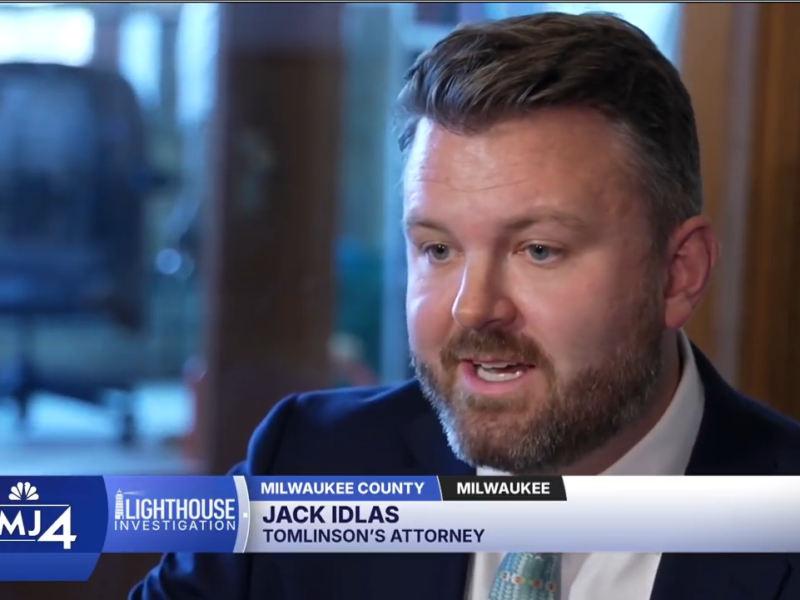 TMJ4 Lighthouse Investigation – City of Milwaukee Settles $575,000 Swatting Lawsuit
TMJ4's Investigative Report about the City of Milwaukee Settling a Civil Rights Lawsuit by Niki Robinson and Patrick Tomlinson for $575,000 For MPD's Relentless Swatting of Their Home.
TMJ4 Lighthouse Investigation – City of Milwaukee Settles $575,000 Swatting Lawsuit
TMJ4's Investigative Report about the City of Milwaukee Settling a Civil Rights Lawsuit by Niki Robinson and Patrick Tomlinson for $575,000 For MPD's Relentless Swatting of Their Home.
-
 Milwaukee couple reaches $575,000 settlement with city after repeated swatting responses
After years of harassment, frustration, and danger, a Milwaukee couple is poised to receive a settlement payment from the City of Milwaukee. The city has agreed to pay the $575,000 settlement for not properly training 20 officers involved.
Milwaukee couple reaches $575,000 settlement with city after repeated swatting responses
After years of harassment, frustration, and danger, a Milwaukee couple is poised to receive a settlement payment from the City of Milwaukee. The city has agreed to pay the $575,000 settlement for not properly training 20 officers involved.
-
 City may pay $575,000 to settle MPD ‘swatting’ lawsuit involving local author
Milwaukee City Attorney Evan Goyke is recommending that the city pay more than half a million dollars to settle a federal lawsuit over the Milwaukee Police Department repeatedly entering and searching a local author’s home in response to false 911 calls.
City may pay $575,000 to settle MPD ‘swatting’ lawsuit involving local author
Milwaukee City Attorney Evan Goyke is recommending that the city pay more than half a million dollars to settle a federal lawsuit over the Milwaukee Police Department repeatedly entering and searching a local author’s home in response to false 911 calls.
-
 Strang Bradley defends Wisconsin man on federal charges after posting TikTok videos
CNN has reached out to Stanton’s attorney for comment.
In a statement to the New York Times, John Bradley, a lawyer for Stanton, said: “It is important to remember that the contents of a criminal complaint represent one side of the story and are just allegations. Mr. Stanton pled not guilty. He is presumed innocent, and we will vigorously defend against these charges in court.”
Strang Bradley defends Wisconsin man on federal charges after posting TikTok videos
CNN has reached out to Stanton’s attorney for comment.
In a statement to the New York Times, John Bradley, a lawyer for Stanton, said: “It is important to remember that the contents of a criminal complaint represent one side of the story and are just allegations. Mr. Stanton pled not guilty. He is presumed innocent, and we will vigorously defend against these charges in court.”
-
Strang Bradley defends Wisconsin man facing federal charges related to ICE agents
In a statement, John Bradley, a lawyer for Mr. Stanton, a Marine Corps veteran who served in the Iraq War, said: “It is important to remember that the contents of a criminal complaint represent one side of the story and are just allegations. Mr. Stanton pled not guilty. He is presumed innocent, and we will vigorously defend against these charges in court.”
-
 County, city, several officers named in civil rights lawsuit
A Rhinelander man has filed a federal lawsuit in the United States District Court for the Western District of Wisconsin, alleging seven Oneida County sheriff’s deputies and two city police officers violated his civil rights by engaging in an illegal search and seizure, unreasonable extension of seizure, unlawful arrest and failure to intervene.
County, city, several officers named in civil rights lawsuit
A Rhinelander man has filed a federal lawsuit in the United States District Court for the Western District of Wisconsin, alleging seven Oneida County sheriff’s deputies and two city police officers violated his civil rights by engaging in an illegal search and seizure, unreasonable extension of seizure, unlawful arrest and failure to intervene.
-
Shorewood woman receives $760K civil rights settlement from City of Milwaukee
Stephanie Rapkin has been awarded a $760,000 settlement after suing Shorewood and Whitefish Bay over her arrest in 2020 where police conducted a search of her home without a warrant. “To our knowledge, this is the largest police misconduct civil rights settlement in Wisconsin that doesn’t involve a death or serious injury,” John Bradley, one of Rapkin’s attorneys, told the Journal Sentinel.
Practice areas
Civil Rights Practice Areas
We litigate the full range of civil rights and police-misconduct claims in Wisconsin state and federal court.
- Excessive Force A law enforcement officer’s use of unnecessary or excessive force is a violation of your Fourth Amendment rights — batons, tasers, pepper spray, canines, choke holds, and both less-lethal and lethal firearms. When force is used to punish rather than to apprehend, you may have a claim. Learn more
- Police Shootings When an officer uses lethal force, it may violate the Fourth Amendment. Police-shooting cases are among the most important and legally complex civil rights claims, demanding rapid investigation and skilled litigation. Contact a lawyer as soon as possible. Learn more
- Illegal Search The Fourth Amendment prohibits unreasonable searches, yet illegal searches remain far too common — warrantless blood draws, cellphone and home searches, canine sniffs, and arbitrary stop-and-frisks. A violation may give rise to a civil rights claim. Learn more
- Illegal Seizure A seizure occurs whenever police restrain your freedom of movement, and the Fourth Amendment requires it to be reasonable. A seizure can be unlawful from the outset or because it lasted longer than necessary — and you may be entitled to compensation. Learn more
- Illegal Stop and Frisk To stop you, an officer must reasonably suspect criminal activity; to frisk you, the officer must reasonably suspect you are presently armed and dangerous. When police fall short of these standards, your Fourth Amendment rights have been violated. Learn more
- Illegal Arrest Police cannot arrest you without probable cause. If you have been held — whether in handcuffs or in a cell — without specific facts showing you committed a crime, you may have an illegal arrest claim. Learn more
- Illegal Home Entry The Supreme Court has called warrantless home entry a “chief evil” the Fourth Amendment was designed to prevent. Because the home carries the highest expectation of privacy, a non-consensual entry can be especially traumatic and may support a claim. Learn more
- Illegal Blood Draw A blood draw is a search under the Fourth Amendment, so police need a warrant or a recognized exception. Warrantless blood draws, especially in OWI investigations, frequently cross constitutional lines. Learn more
- Illegal School Searches Fourth Amendment protection follows students into school. While schools operate under a modified standard, a search of a student or their property still requires justification, and invasive searches are all too common. Learn more
- Malicious Prosecution Malicious prosecution occurs when you are charged without probable cause and for an improper purpose, and the case ends in your favor. The Fourth Amendment and Section 1983 may provide a path to accountability and compensation. Learn more
- Police Dog Bites Bites inflicted by a police dog can violate your Fourth or Eighth Amendment rights and may constitute excessive force. Officers can be held responsible when a K-9 is used unreasonably or without adequate warning or control. Learn more
- First Amendment Retaliation The First Amendment protects speech, expressive conduct, assembly, worship, and the right to petition. Retaliatory arrests, citations, or force in response to protected activity may give rise to a claim. Learn more
- Jail Denial of Medical Care Incarcerated people depend on staff for medical care. When staff are deliberately indifferent to a serious medical need — ignoring injuries, withholding medication, or refusing referrals — it can be a civil rights violation. Learn more
- Jail Deaths Jails can be held responsible when a person in custody dies from an untreated condition, withheld medication, a mental-health crisis, or a failure to protect them. Families may have a civil rights and wrongful death claim. Learn more
- Jail Failure to Protect The Eighth and Fourteenth Amendments require staff to protect incarcerated people from violence by other inmates. When officials ignore a known and substantial risk of harm, a failure-to-protect claim may follow. Learn more
- Wrongful Convictions These cases often involve fabricated evidence, coerced confessions, withheld exculpatory information, or mistaken identification. If you were convicted of a crime you did not commit, you may have a claim to clear your name and recover compensation. Learn more
- Civil Rights Appeals Civil rights cases frequently turn on complex constitutional questions decided on appeal. We handle civil rights appeals in state and federal court, including before the Seventh Circuit Court of Appeals. Learn more
Our Team
Strang Bradley’s Civil Rights Lawyers


Answers
Civil Rights FAQs
-
What is a Section 1983 civil rights claim?
Section 1983 (42 U.S.C. § 1983) lets you sue state and local officials—including police—in federal court when they violate your constitutional rights, such as through excessive force, an unlawful search, or a false arrest. A successful claim can recover money damages for the harm you suffered.
-
How much does a civil rights lawyer cost?
Consultations at Strang Bradley are free and confidential. We handle civil rights and police misconduct cases on a contingency-fee basis, which means you pay no attorney fees unless we recover compensation for you.
-
Do I still have a case if the officers receive qualified immunity?
Often, yes. Even when individual officers are dismissed on qualified immunity, a city or county can still be held liable for failing to train or supervise its officers—municipalities do not enjoy qualified immunity. In Robinson & Tomlinson v. City of Milwaukee, that path led to a $575,000 settlement.
-
What is summary judgment, and why does it matter in a civil rights case?
Summary judgment asks the judge to rule that you win before trial because the key facts are not genuinely in dispute. Strang Bradley wins plaintiff’s summary judgment in civil rights cases far more often than the state and national averages, which can resolve liability and leave the jury only to decide damages.
-
How long do I have to file a civil rights claim in Wisconsin?
You have a limited time set by Wisconsin law, and claims against government entities can carry much shorter notice deadlines. Because the deadlines vary by case and evidence fades quickly, you should speak with a lawyer as soon as possible.
Were your civil rights violated? Let’s talk.
Consultations are confidential. Tell us what happened and we will tell you how we can help.