

Civil Rights & Police Misconduct
Wisconsin Jail Medical Care Denial Lawyers
People in Custody Have a Constitutional Right to Adequate Medical Care
People in Custody Have a Constitutional Right to Adequate Medical Care
When the government holds a person in a jail or prison, it takes on responsibility for their basic needs — including medical and mental health care. The Eighth Amendment (for convicted prisoners) and the Fourteenth Amendment (for pretrial detainees) prohibit officials from being deliberately indifferent to a serious medical need. The Supreme Court established in Estelle v. Gamble that ignoring a serious medical need can amount to cruel and unusual punishment.
When jail staff ignore obvious symptoms, withhold prescribed medication, delay treatment, or block access to care — and a detainee suffers serious, preventable harm — that person and their family may have a civil rights claim. Strang Bradley represents people harmed by inadequate jail medical care across Wisconsin.
Common Forms of Denied or Inadequate Care
- Ignoring requests for urgent medical attention
- Failing to provide medication for known chronic conditions (diabetes, heart disease, seizure disorders)
- Failing to manage drug or alcohol withdrawal — a potentially life-threatening emergency
- Inadequate mental health treatment, including failure to address known suicide risk
- Delayed response to obvious or worsening symptoms
- Failure to refer to a hospital or specialist for serious or chronic conditions
The ‘Deliberate Indifference’ Standard
These claims require more than ordinary medical negligence. You generally must show that staff knew of and disregarded a substantial risk to your health or safety — the ‘deliberate indifference’ standard from Farmer v. Brennan. For pretrial detainees, some courts apply a somewhat more forgiving objective-reasonableness standard. Proving what officials knew and ignored is the heart of these cases, which is why early access to records is critical.
What to Do If You or a Loved One Was Denied Medical Care in Jail
- Submit written medical request slips to the jail medical staff to document your condition and repeated requests for medical care.
- Keep copies of any written grievances or requests for care and the responses.
- Write down the names of the officers and medical staff involved and the timeline of requests and refusals.
- File any necessary notices of claims that may be required.
- Contact a civil rights attorney promptly to preserve evidence and deadlines.
Constitutional and Wisconsin Law
Jail medical-care claims are brought under the Eighth and Fourteenth Amendments through 42 U.S.C. § 1983. The county or municipality operating the jail — and any private medical contractor — may be liable under Monell where the harm reflects a policy, inadequate staffing or training, or a pattern of ignoring medical needs.
Compensation You May Be Entitled To From Jail Denial of Medical Care
- Medical expenses to treat the worsened condition
- Future care for permanent harm
- Lost wages and earning capacity
- Pain, suffering, and emotional distress
- Compensation for the constitutional violation itself
- Punitive damages against individuals in cases of flagrant indifference
- Attorney’s fees under 42 U.S.C. § 1988
Why Choose Strang Bradley for a Jail Medical Care Case
The government controls the evidence in these cases, facilities resist transparency, and ‘deliberate indifference’ is a demanding standard. Our attorneys know how to subpoena jail and medical records, depose correctional and medical staff, retain independent medical experts, and build persuasive cases against institutions that would rather these failures stay hidden.
Strang Bradley’s History of Winning Jail Medical Care Denial Cases
A selection of the Jail Medical Care Denial cases the firm has recently filed, won on summary judgment, and obtained judgments in.
Recent Cases Filed
-
Koplien v. Marathon County et al
No. 3:26-CV-00066 (W.D. Wis.)
Date Case Filed: 1/27/26
Defendants: Marathon County, Tristen Wanden, Ronald Kohlmann, and Lor Vang
Claims:- Count 1: Excessive Force (Against Defendant Ronald Kohlmann)
- Count 2: Deliberate Indifference to Serious Medical Needs
- Count 3: Monell Claim Against Marathon County
- Count 4: Indemnification Claim Against Marathon County
In the news
-
 55 Swatting Calls: A Couple’s Fight Against Online Stalkers and the Police
The city of Milwaukee agreed to a $575,000 settlement after months of heavily armed police responses to 911 calls to the couple’s home that officials knew were hoaxes.
John Bradley, a lawyer for the couple, acknowledged that the Milwaukee police “did their job on the first few swatting calls.”
“The problem,” he added, “came after it had happened dozens of times.”
55 Swatting Calls: A Couple’s Fight Against Online Stalkers and the Police
The city of Milwaukee agreed to a $575,000 settlement after months of heavily armed police responses to 911 calls to the couple’s home that officials knew were hoaxes.
John Bradley, a lawyer for the couple, acknowledged that the Milwaukee police “did their job on the first few swatting calls.”
“The problem,” he added, “came after it had happened dozens of times.”
-
 Wisconsin police chief sued 3x, accused of unconstitutional stops
A sheriff’s deputy and small-town police chief, Brendan Cutrell, is the subject of three federal lawsuits alleging he violated the Fourth Amendment rights of individuals he pulled over.
Wisconsin police chief sued 3x, accused of unconstitutional stops
A sheriff’s deputy and small-town police chief, Brendan Cutrell, is the subject of three federal lawsuits alleging he violated the Fourth Amendment rights of individuals he pulled over.
-
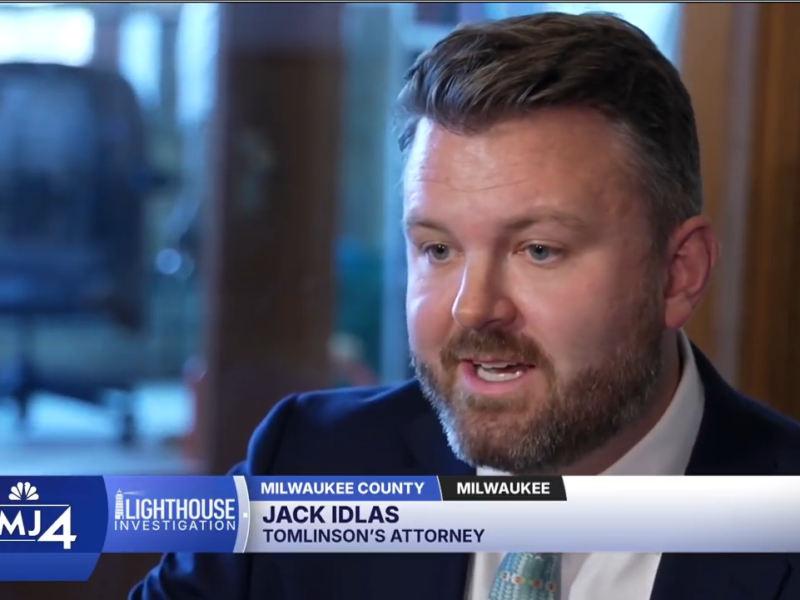 TMJ4 Lighthouse Investigation – City of Milwaukee Settles $575,000 Swatting Lawsuit
TMJ4's Investigative Report about the City of Milwaukee Settling a Civil Rights Lawsuit by Niki Robinson and Patrick Tomlinson for $575,000 For MPD's Relentless Swatting of Their Home.
TMJ4 Lighthouse Investigation – City of Milwaukee Settles $575,000 Swatting Lawsuit
TMJ4's Investigative Report about the City of Milwaukee Settling a Civil Rights Lawsuit by Niki Robinson and Patrick Tomlinson for $575,000 For MPD's Relentless Swatting of Their Home.
-
 Milwaukee couple reaches $575,000 settlement with city after repeated swatting responses
After years of harassment, frustration, and danger, a Milwaukee couple is poised to receive a settlement payment from the City of Milwaukee. The city has agreed to pay the $575,000 settlement for not properly training 20 officers involved.
Milwaukee couple reaches $575,000 settlement with city after repeated swatting responses
After years of harassment, frustration, and danger, a Milwaukee couple is poised to receive a settlement payment from the City of Milwaukee. The city has agreed to pay the $575,000 settlement for not properly training 20 officers involved.
-
 City may pay $575,000 to settle MPD ‘swatting’ lawsuit involving local author
Milwaukee City Attorney Evan Goyke is recommending that the city pay more than half a million dollars to settle a federal lawsuit over the Milwaukee Police Department repeatedly entering and searching a local author’s home in response to false 911 calls.
City may pay $575,000 to settle MPD ‘swatting’ lawsuit involving local author
Milwaukee City Attorney Evan Goyke is recommending that the city pay more than half a million dollars to settle a federal lawsuit over the Milwaukee Police Department repeatedly entering and searching a local author’s home in response to false 911 calls.
-
 Strang Bradley defends Wisconsin man on federal charges after posting TikTok videos
CNN has reached out to Stanton’s attorney for comment.
In a statement to the New York Times, John Bradley, a lawyer for Stanton, said: “It is important to remember that the contents of a criminal complaint represent one side of the story and are just allegations. Mr. Stanton pled not guilty. He is presumed innocent, and we will vigorously defend against these charges in court.”
Strang Bradley defends Wisconsin man on federal charges after posting TikTok videos
CNN has reached out to Stanton’s attorney for comment.
In a statement to the New York Times, John Bradley, a lawyer for Stanton, said: “It is important to remember that the contents of a criminal complaint represent one side of the story and are just allegations. Mr. Stanton pled not guilty. He is presumed innocent, and we will vigorously defend against these charges in court.”
-
Strang Bradley defends Wisconsin man facing federal charges related to ICE agents
In a statement, John Bradley, a lawyer for Mr. Stanton, a Marine Corps veteran who served in the Iraq War, said: “It is important to remember that the contents of a criminal complaint represent one side of the story and are just allegations. Mr. Stanton pled not guilty. He is presumed innocent, and we will vigorously defend against these charges in court.”
-
 County, city, several officers named in civil rights lawsuit
A Rhinelander man has filed a federal lawsuit in the United States District Court for the Western District of Wisconsin, alleging seven Oneida County sheriff’s deputies and two city police officers violated his civil rights by engaging in an illegal search and seizure, unreasonable extension of seizure, unlawful arrest and failure to intervene.
County, city, several officers named in civil rights lawsuit
A Rhinelander man has filed a federal lawsuit in the United States District Court for the Western District of Wisconsin, alleging seven Oneida County sheriff’s deputies and two city police officers violated his civil rights by engaging in an illegal search and seizure, unreasonable extension of seizure, unlawful arrest and failure to intervene.
-
Shorewood woman receives $760K civil rights settlement from City of Milwaukee
Stephanie Rapkin has been awarded a $760,000 settlement after suing Shorewood and Whitefish Bay over her arrest in 2020 where police conducted a search of her home without a warrant. “To our knowledge, this is the largest police misconduct civil rights settlement in Wisconsin that doesn’t involve a death or serious injury,” John Bradley, one of Rapkin’s attorneys, told the Journal Sentinel.
Our Team
Strang Bradley’s Civil Rights Lawyers


Answers
Jail Medical Care FAQs
-
Is denial of medical care in jail just malpractice?
It can be more than that. A civil rights claim requires showing 'deliberate indifference' — that staff knew of a serious medical need and disregarded it — a higher bar than ordinary negligence, but one that opens the door to federal claims and attorney's fees.
-
My family member survived but was seriously harmed. Is there a claim?
Possibly. You do not have to lose a loved one to have a claim. Serious, preventable harm from denied or delayed care can support a Section 1983 case.
-
How long do we have to act?
You should act quickly. Jail in prison claims often have strict grievance and notice deadlines.
Were you hurt in jail? Let’s talk.
Consultations are free and confidential. Tell us what happened and we will tell you how we can help.