

Civil Rights & Police Misconduct
Wisconsin Illegal Search Lawyers
Your Home, Your Car, and Your Body Are Protected from Unreasonable Government Searches
Your Home, Your Car, and Your Body Are Protected from Unreasonable Government Searches
The Fourth Amendment guarantees your right to be free from unreasonable searches and seizures. Police generally need a valid warrant or a recognized exception (such as consent) before they can search your home, your vehicle, your phone, or your person. When they ignore that requirement, it is not just a legal technicality — it is a violation of your fundamental constitutional rights.
At Strang Bradley, we represent people across Wisconsin who have been subjected to unlawful searches, and we use the law to hold law enforcement accountable for that conduct.
What Makes a Search Illegal?
A search is illegal when it is conducted without a valid warrant and without a recognized exception to the warrant requirement, or when the warrant itself was defective. Common unlawful search scenarios include:
- Warrantless entry into a home without consent, exigency, or hot pursuit
- Vehicle searches beyond the scope of a valid traffic stop
- Body searches or strip searches without legal justification
- Phone or device searches without a warrant (see Riley v. California)
- Searches based on a warrant obtained through false or misleading information in the affidavit
- Searches that exceed the scope of a lawful warrant
The Criminal Case vs. The Civil Rights Case
If you were charged with a crime following an illegal search, suppression of that evidence (the exclusionary rule) is handled in your criminal case. But the illegal search itself — the constitutional violation — is a separate harm for which you may be entitled to civil damages. You do not need to have been criminally charged to bring a civil rights claim for an unlawful search.
What to Do If You Were Subjected to an Illegal Search
- Do not physically resist or obstruct the search, even if you believe it is unlawful. Assert your rights verbally and calmly.
- Write down exactly what happened, what officers said, and how the search was justified (if any justification was given) as soon as possible.
- Document any damage to your property caused during the search.
- Contact Strang Bradley to evaluate your civil rights claim.
Constitutional and Wisconsin Law
Illegal search claims are brought under the Fourth Amendment through 42 U.S.C. § 1983. Wisconsin’s own constitution (Article I, Section 11) also protects against unreasonable searches and seizures. In addition to the individual officers, municipalities can be held liable if the unlawful search reflects an official policy or a widespread practice.
Compensation You May Be Entitled To From An Illegal Search
- Compensation for emotional distress, humiliation, and trauma
- Property damage caused during the search
- Lost wages if you were detained as a result
- Compensation for the constitutional violation itself
- Punitive damages in egregious cases
- Attorney’s fees under 42 U.S.C. § 1988
Why Choose Strang Bradley for Your Illegal Search Case
Our attorneys have deep experience in both criminal defense and civil rights law — a combination that is uniquely valuable in illegal search cases. We understand how to analyze search warrant affidavits, challenge the legal basis for warrantless searches, and present Fourth Amendment violations compellingly to juries and judges.
Strang Bradley’s History of Winning Unreasonable Search Cases
A selection of the unreasonable search cases the firm has recently filed, won on summary judgment, and obtained judgments in.
Recent Cases Filed
-
Achterling v. Polk County et al
No. 3:25-CV-00386 (W.D. Wis.)
Date Case Filed: 5/14/25
Defendants: Polk County, Troy Olson, and Torsten Swanson
Claims:- Count 1: Unlawful Entry to Home
- Count 2: Unlawful Seizure and Arrest
- Count 3: Indemnification Claim Against Polk County
-
Cousineau v. City of Milwaukee et al
No. 2:25-CV-01541 (E.D. Wis.)
Date Case Filed: 10/7/25
Defendants: City of Milwaukee and Aaron W. Froh, Jr.
Claims:- Count 1: Unlawful Entry to Home
- Count 2: Indemnification Claim Against City of Milwaukee
-
Grulke v. City of West Bend et al
No. 2:25-CV-00697 (E.D. Wis.)
Date Case Filed: 5/13/25
Defendants: City of West Bend and Montana Luecking
Claims:- Count 1: Unlawful Search
- Count 2: Indemnification Claim Against City of West Bend
-
Holbrook v. City of Milwaukee et al
No. 2:25-CV-00970 (E.D. Wis.)
Date Case Filed: 7/8/25
Defendants: City of Milwaukee, Omar Contreras, and Rafael Perez
Claims:- Count 1: Unlawful Home Entry
- Count 2: Unlawful Seizure Inside Home
- Count 3: Indemnification Claim Against City of Milwaukee
Summary Judgment Wins
-
Faison v. Wagas
No. 3:25-CV-00002 (W.D. Wis.)
Date Case Filed: 1/2/25
Defendants: Rolly Wagas
Claims:- Count 1: Unlawful Search
Date of Summary Judgment Decision: 4/17/26
Won Count 1 (Unlawful Search). Judge William M. Conley concluded the defendant violated the plaintiff’s 4th Amendment rights.
-
Furdge v. City of Monona
No. 3:20-cv-00846 (W.D. Wis.)
Defendants: City of Monona, Jared Wedig, Luke Wunsch
Date of Summary Judgment Decision: 2/16/22
Won Warrantless Entry and Unlawful Seizure. Judge James D. Peterson concluded the officers violated the plaintiff’s 4th Amendment rights.
-
Jackson v. City of Milwaukee
No. 2:22-cv-00121 (E.D. Wis.)
Defendants: City of Milwaukee, Nora R. Burlo, Tyler J. Seelow
Date of Summary Judgment Decision: 5/18/23
Won Warrantless Search of Residence and Unlawful Seizure. Judge William E. Duffin concluded the officers violated the plaintiffs’ 4th Amendment rights.
Judgments Obtained
-
Carter v. City of New Berlin et al
No. 2:25-CV-01719 (E.D. Wis.)
Date Case Filed: 11/4/25
Defendants: City of New Berlin, Lisette Ceballos, Melissa Romenesko, and Stacey Howard
Claims:- Count 1: Prolonged Seizure
- Count 2: False Arrest
- Count 3: Retaliation
- Count 4: Monell Claim Against City of New Berlin
- Count 5: Indemnification Claim Against City of New Berlin
Date of Judgment: April 17, 2026
Judgment entered for plaintiff Richard Carter against the City of New Berlin, Lisette Ceballos, Melissa Romenesko, and Stacey Howard.
-
Hawkins v. City of Kenosha et al
No. 2:26-CV-00384 (E.D. Wis.)
Date Case Filed: 3/10/26
Defendants: City of Kenosha, Michael O’Neil, Matthew Lovell, Anthony Beck, Justin Labatore, and Caden Kreuser
Claims:- Count 1: Unlawful Search and Failure to Intervene
- Count 2: Illegal Seizure for Extending Traffic Stop
- Count 3: Unlawful Search and Failure to Intervene
- Count 4: Unlawful Search and Failure to Intervene
- Count 5: Indemnification Claim Against City of Kenosha
Date of Judgment: August 17, 2026
Judgment entered for plaintiffs Erica Hawkins against the City of Kenosha, Michael O’Neil, Matthew Lovell, Anthony Beck, Justin Labatore, and Caden Kreuser.
In the news
-
 55 Swatting Calls: A Couple’s Fight Against Online Stalkers and the Police
The city of Milwaukee agreed to a $575,000 settlement after months of heavily armed police responses to 911 calls to the couple’s home that officials knew were hoaxes.
John Bradley, a lawyer for the couple, acknowledged that the Milwaukee police “did their job on the first few swatting calls.”
“The problem,” he added, “came after it had happened dozens of times.”
55 Swatting Calls: A Couple’s Fight Against Online Stalkers and the Police
The city of Milwaukee agreed to a $575,000 settlement after months of heavily armed police responses to 911 calls to the couple’s home that officials knew were hoaxes.
John Bradley, a lawyer for the couple, acknowledged that the Milwaukee police “did their job on the first few swatting calls.”
“The problem,” he added, “came after it had happened dozens of times.”
-
 Wisconsin police chief sued 3x, accused of unconstitutional stops
A sheriff’s deputy and small-town police chief, Brendan Cutrell, is the subject of three federal lawsuits alleging he violated the Fourth Amendment rights of individuals he pulled over.
Wisconsin police chief sued 3x, accused of unconstitutional stops
A sheriff’s deputy and small-town police chief, Brendan Cutrell, is the subject of three federal lawsuits alleging he violated the Fourth Amendment rights of individuals he pulled over.
-
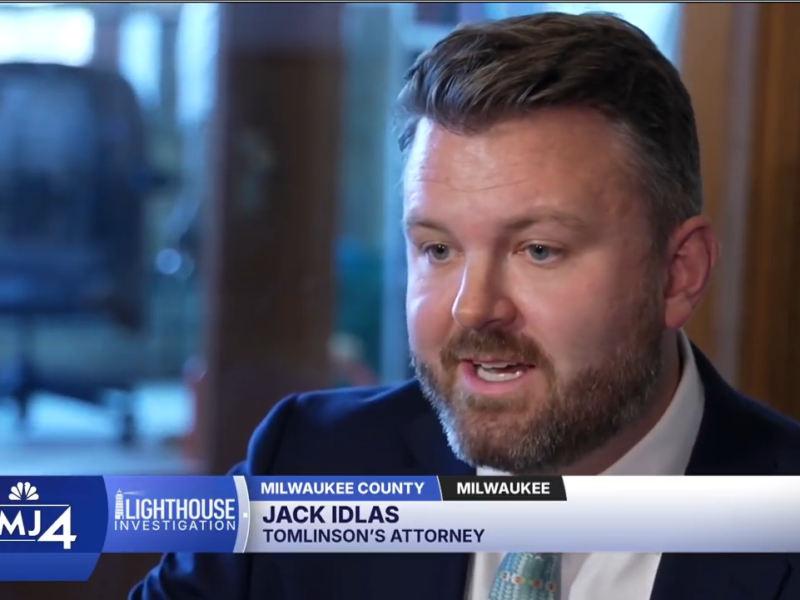 TMJ4 Lighthouse Investigation – City of Milwaukee Settles $575,000 Swatting Lawsuit
TMJ4's Investigative Report about the City of Milwaukee Settling a Civil Rights Lawsuit by Niki Robinson and Patrick Tomlinson for $575,000 For MPD's Relentless Swatting of Their Home.
TMJ4 Lighthouse Investigation – City of Milwaukee Settles $575,000 Swatting Lawsuit
TMJ4's Investigative Report about the City of Milwaukee Settling a Civil Rights Lawsuit by Niki Robinson and Patrick Tomlinson for $575,000 For MPD's Relentless Swatting of Their Home.
-
 Milwaukee couple reaches $575,000 settlement with city after repeated swatting responses
After years of harassment, frustration, and danger, a Milwaukee couple is poised to receive a settlement payment from the City of Milwaukee. The city has agreed to pay the $575,000 settlement for not properly training 20 officers involved.
Milwaukee couple reaches $575,000 settlement with city after repeated swatting responses
After years of harassment, frustration, and danger, a Milwaukee couple is poised to receive a settlement payment from the City of Milwaukee. The city has agreed to pay the $575,000 settlement for not properly training 20 officers involved.
-
 City may pay $575,000 to settle MPD ‘swatting’ lawsuit involving local author
Milwaukee City Attorney Evan Goyke is recommending that the city pay more than half a million dollars to settle a federal lawsuit over the Milwaukee Police Department repeatedly entering and searching a local author’s home in response to false 911 calls.
City may pay $575,000 to settle MPD ‘swatting’ lawsuit involving local author
Milwaukee City Attorney Evan Goyke is recommending that the city pay more than half a million dollars to settle a federal lawsuit over the Milwaukee Police Department repeatedly entering and searching a local author’s home in response to false 911 calls.
-
 Strang Bradley defends Wisconsin man on federal charges after posting TikTok videos
CNN has reached out to Stanton’s attorney for comment.
In a statement to the New York Times, John Bradley, a lawyer for Stanton, said: “It is important to remember that the contents of a criminal complaint represent one side of the story and are just allegations. Mr. Stanton pled not guilty. He is presumed innocent, and we will vigorously defend against these charges in court.”
Strang Bradley defends Wisconsin man on federal charges after posting TikTok videos
CNN has reached out to Stanton’s attorney for comment.
In a statement to the New York Times, John Bradley, a lawyer for Stanton, said: “It is important to remember that the contents of a criminal complaint represent one side of the story and are just allegations. Mr. Stanton pled not guilty. He is presumed innocent, and we will vigorously defend against these charges in court.”
-
Strang Bradley defends Wisconsin man facing federal charges related to ICE agents
In a statement, John Bradley, a lawyer for Mr. Stanton, a Marine Corps veteran who served in the Iraq War, said: “It is important to remember that the contents of a criminal complaint represent one side of the story and are just allegations. Mr. Stanton pled not guilty. He is presumed innocent, and we will vigorously defend against these charges in court.”
-
 County, city, several officers named in civil rights lawsuit
A Rhinelander man has filed a federal lawsuit in the United States District Court for the Western District of Wisconsin, alleging seven Oneida County sheriff’s deputies and two city police officers violated his civil rights by engaging in an illegal search and seizure, unreasonable extension of seizure, unlawful arrest and failure to intervene.
County, city, several officers named in civil rights lawsuit
A Rhinelander man has filed a federal lawsuit in the United States District Court for the Western District of Wisconsin, alleging seven Oneida County sheriff’s deputies and two city police officers violated his civil rights by engaging in an illegal search and seizure, unreasonable extension of seizure, unlawful arrest and failure to intervene.
-
Shorewood woman receives $760K civil rights settlement from City of Milwaukee
Stephanie Rapkin has been awarded a $760,000 settlement after suing Shorewood and Whitefish Bay over her arrest in 2020 where police conducted a search of her home without a warrant. “To our knowledge, this is the largest police misconduct civil rights settlement in Wisconsin that doesn’t involve a death or serious injury,” John Bradley, one of Rapkin’s attorneys, told the Journal Sentinel.
Our Team
Strang Bradley’s Civil Rights Lawyers


Answers
Illegal Search FAQs
-
Can I sue for an illegal search if I was never charged?
Yes. The unlawful search is its own constitutional harm. You do not need to have been charged or convicted to bring a civil rights claim.
-
Is suppressing the evidence the same as a civil claim?
No. Suppression happens in your criminal case; the civil rights claim seeks damages for the violation itself, and the two are handled separately.
-
What if police had a warrant?
A warrant can still be invalid — for example, if it was based on false information or police searched beyond its scope. Those searches can still be unlawful.
Did Police Enter Your Home? Let’s talk.
Consultations are free and confidential. Tell us what happened and we will tell you how we can help.